
Library Guide: Research

MLA
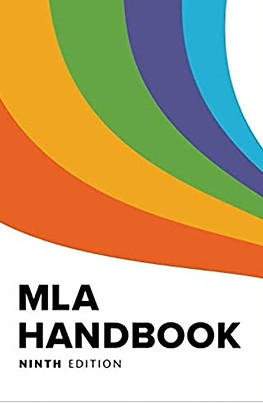
MLA is the acronym for the Modern Language Association of America, which was founded in 1883. Members have worked to strengthen the study and teaching of language and literature.
One of the many roles of the MLA is to create and maintain an authorized MLA Handbook with guidelines for students and educators in their approach to research, writing, and documentation.
The most recent MLA Handbook was published in spring 2021.
The MLA Style Center offers free online resources on MLA style.
Evaluating Sources
When Looking for Sources, Ask Yourself:
-
What are the author's CREDENTIALS?
-
Aacademic or institutional affiliations?
-
Publications?
-
Easy to find information about the author?
2. What is the purpose of the source?
-
Academic research
-
Personal response or analysis
-
Work for a particular organization
-
Offering political viewpoint
-
Selling service or bias
-
Blog with no credentials
3. What is the scope of the source?
-
Determine what the source covers and how deeply
-
What Kind of Source Is This?
Throughout the research process, as a writer you will need to find a variety of sources. The types of sources you will look for and use for your academic writing may consist of primary, secondary, and tertiary sources.
-
Academic Journals
-
Published weekly, quarterly, once a year
-
Contain cutting-edge research
-
Use peer review [meaning experts in the field assess the quality and credibility of an article or research before it is published.
-
Journal articles include a full bibliography and use scholarly or technical language
-
The article typically contains
-
Written by scholars, professors, experts in their field
-
May contain abstract, introduction, methods, results, discussion, list of references
-
-
There are many kinds of academic journals
-
Original: publish original data
-
Theoretical: provide analysis or theory about the foundation of a particular field
-
Review: summarize current state of a particular field
-
-
-
Books
-
Academic books written by experts, by a single author or several authors, that offer an extensive overview or analysis of a topic, even if it is only one chapter that can be accessed online or in print are considered trustworthy sources
-
-
Websites
-
Reliable and credible sources on websites can often be found, but you have to be patient and look a little harder. Often students are impatient and choose the first links that pop up on a random Google web search, which often is not a reliable search.
-